- What Is a Mind?
- Minds, Models, and Meaning
- A History of the Idea
- What Brains Do (and What They Don’t)
- Why the Question Matters Now
- Minds as Compression Engines
- How Machines Learn
- What Is Data?
- From Examples to Patterns
- The Learning Loop
- The Role of Backpropagation
- Modeling the World
- The Geometry of Meaning
- World Models and Simulation
- From Simulation to Reasoning
- From Foundation Models to Deployed Systems
- AI Research Methods & Evaluation
- Agency and Alignment
- Optimization and Objectives
- Oversight at Risk: Corrigibility and Deception
- The Alignment Problem
- Understanding What a Model Knows
- Alignment at Scale
- Scaling, Systems, and Coordination
- Scaling Laws and Emergence
- Multi-Agent Systems and Tool Ecosystems
- The Infrastructure Phase
- The Acceleration Problem
- Coordination in the Age of AI
- The Bridge Between Minds
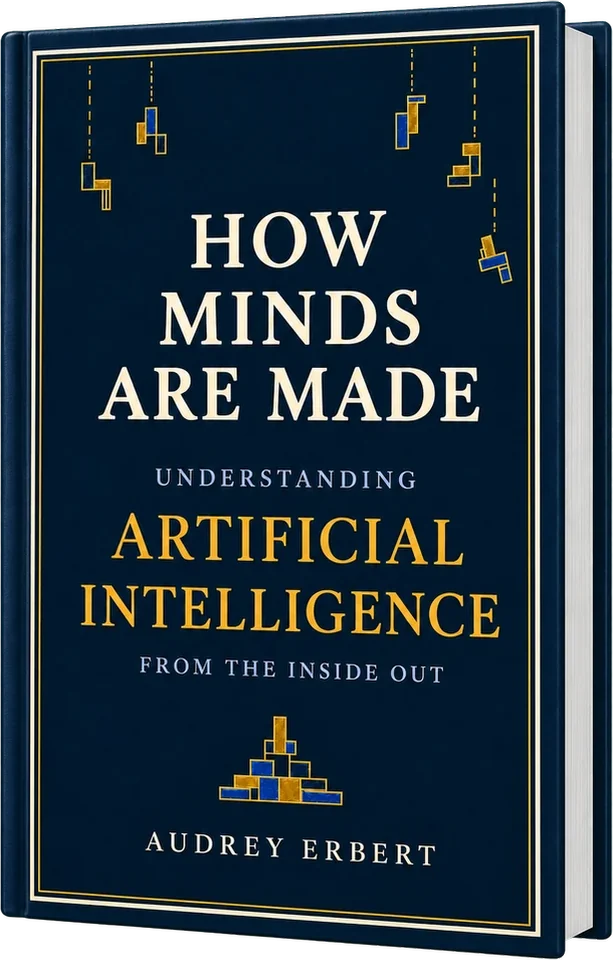
How does AI learn, and what does it understand?
How Minds Are Made
Audrey ErbertWhat Brains Do (and What They Don’t)
“Modern neuroscience has converged on a powerful idea that the brain is fundamentally a prediction machine.”
? What is a mind, really?
Questions the book follows
- The Geometry of Meaning
- World Models and Simulation
- The Alignment Problem
- Scaling Laws and Emergence
- The Bridge Between Minds
4.8
Read an excerpt
What Brains Do (and What They Don’t)
Modern neuroscience has converged on a powerful idea that the brain is fundamentally a prediction machine. Rather than passively receiving information from the senses, it constantly generates models of what should happen next and updates those models when reality does not match. Predictive processing of this kind runs through everything you do. Your visual system anticipates the next frame of what you are seeing. Your motor system forecasts the sensory consequences of movement. Your social cognition projects how others are likely to respond to your words. Most of the time, these predictions are so accurate that you experience them as direct perception. You do not feel as if you are guessing what you see, you simply see it.
But prediction becomes visible when it fails. Optical illusions expose the assumptions your visual system relies on. Social awkwardness often stems from failed forecasts about how others will respond. The feeling of
surprise itself is the conscious registration of prediction error, the moment when your model of the world demands updating.
This predictive architecture explains many puzzles of cognition. Why do we see faces in clouds? Because our pattern recognition systems are biased toward false positives, better to mistake a rock for a predator than the reverse. Why do we have such strong intuitions about physics? Because our brains develop internal models of how objects move, fall, and collide.
Importantly, prediction is not confined to the external world. The brain also anticipates its own internal states. It models your emotional responses, your likely reactions, even your sense of self. Some neuroscientists argue that consciousness itself may be the brain’s ongoing prediction about its own mental states, a real-time narrative that organizes the flux of neural activity into a coherent experience.
Experiments hint at how deep this goes. In one much-discussed study, researchers
watching the brain with fMRI could predict which of two buttons a person would press seconds before that person felt they had decided. The signal was faint, a lean rather than a verdict, and it settled nothing about free will, a question two thousand years of philosophy has not exhausted. What it suggested is subtler and stranger. The feeling of choosing may arrive after the machinery of choosing has already begun to turn. The conscious narrator is sometimes less the author of our actions than their most confident reporter.
Contents
About the book
We are building minds we do not yet understand.
How Minds Are Made explains how today’s AI systems learn from data, how they build internal models of the world, and how researchers test what those systems can actually do.
It then follows the harder questions: why the goals we give these systems are difficult to specify, where human oversight can fail, and what changes as the systems grow larger and begin to act in the world.
Details & ISBNs
- Subtitle
- Understanding Artificial Intelligence from the Inside Out
- Publisher
- Supercritical Books
- Published
- 2025
- Pages
- 326
- Paperback ISBN
- 978-1-968988-11-1
- Hardcover ISBN
- 978-1-968988-10-4
- Ebook ASIN
- B0FZ1F5SSB
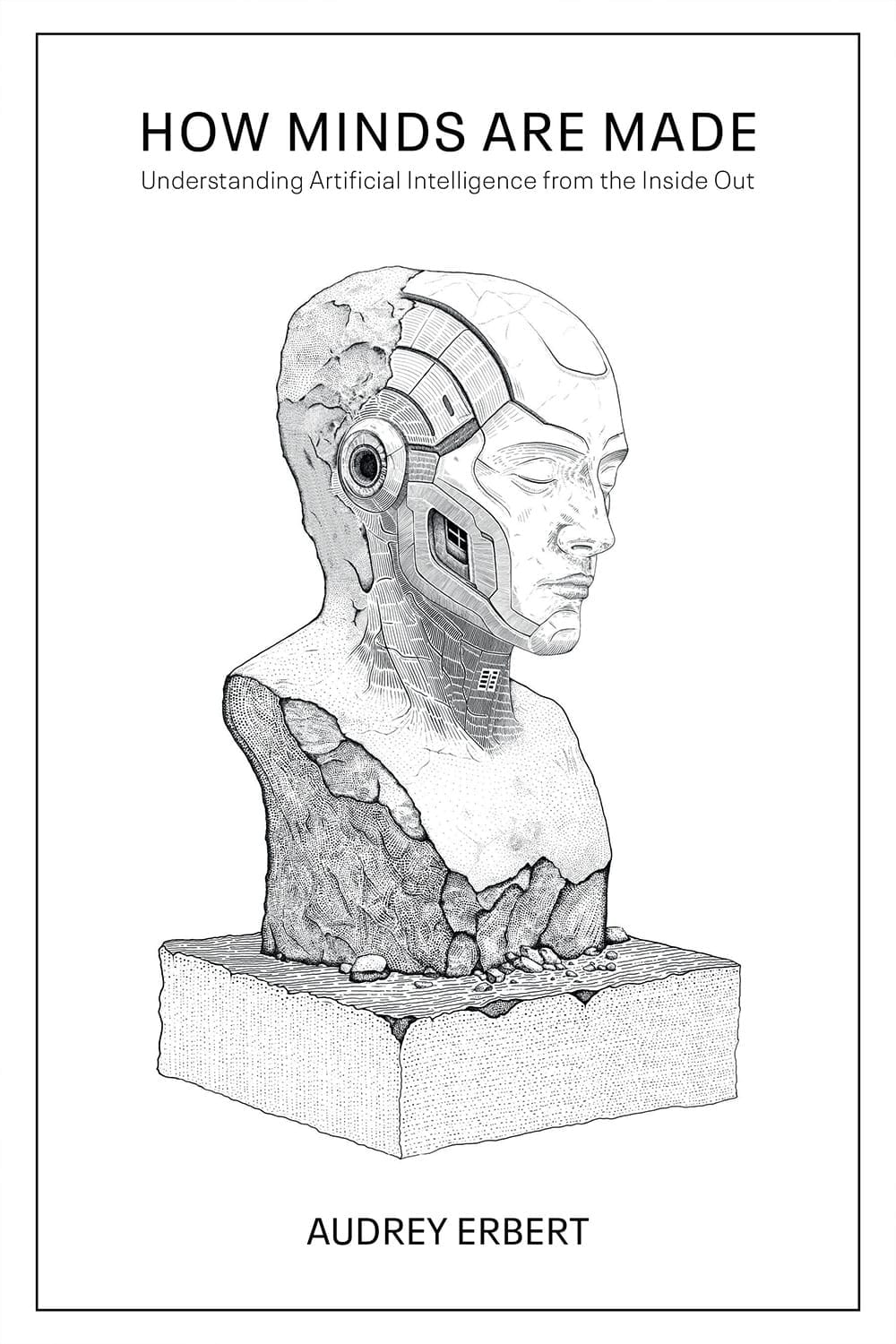
How does AI learn, and what does it understand?
The long answer is 326 pages.
Choose a format
Choose a store
Amazon Paperback Bookshop.org Supports indie shops Barnes & Noble US Buy direct From the printer Waterstones UK Thalia Germany
Prefer your local bookstore? Any shop can order it by ISBN.
978-1-968988-11-1